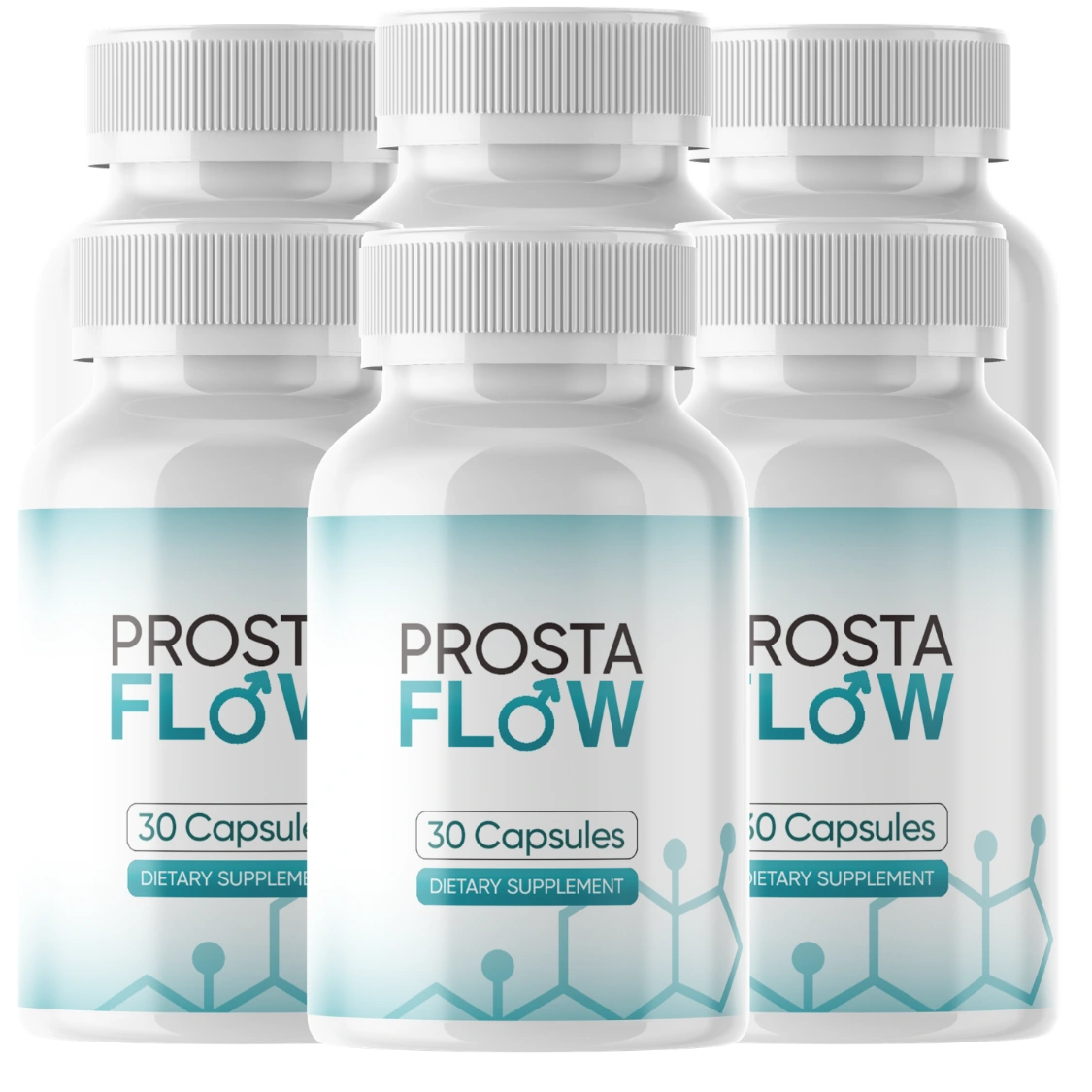
ProstaFlow Official Website › Blog › Reading A Ratio
How To Read A Ratio On A Supplement Facts Panel
A number on a panel is not always the amount of the thing you came for. Ratios, salts, standardisation percentages and Daily Value bases all change what a weight means, and knowing the four of them turns a wall of milligrams into something you can actually compare.
- A weight on a panel is usually the weight of the whole salt or extract, not of the substance inside it.
- A printed ratio, such as 2:1, lets you do the sum. An absent ratio makes the row unresolvable.
- A percentage, such as 5%, works the same way on a standardised botanical and changes the meaning by a factor of twenty.
- A Daily Value percentage is calculated against one regulatory reference figure, which is not always the one for your age group.
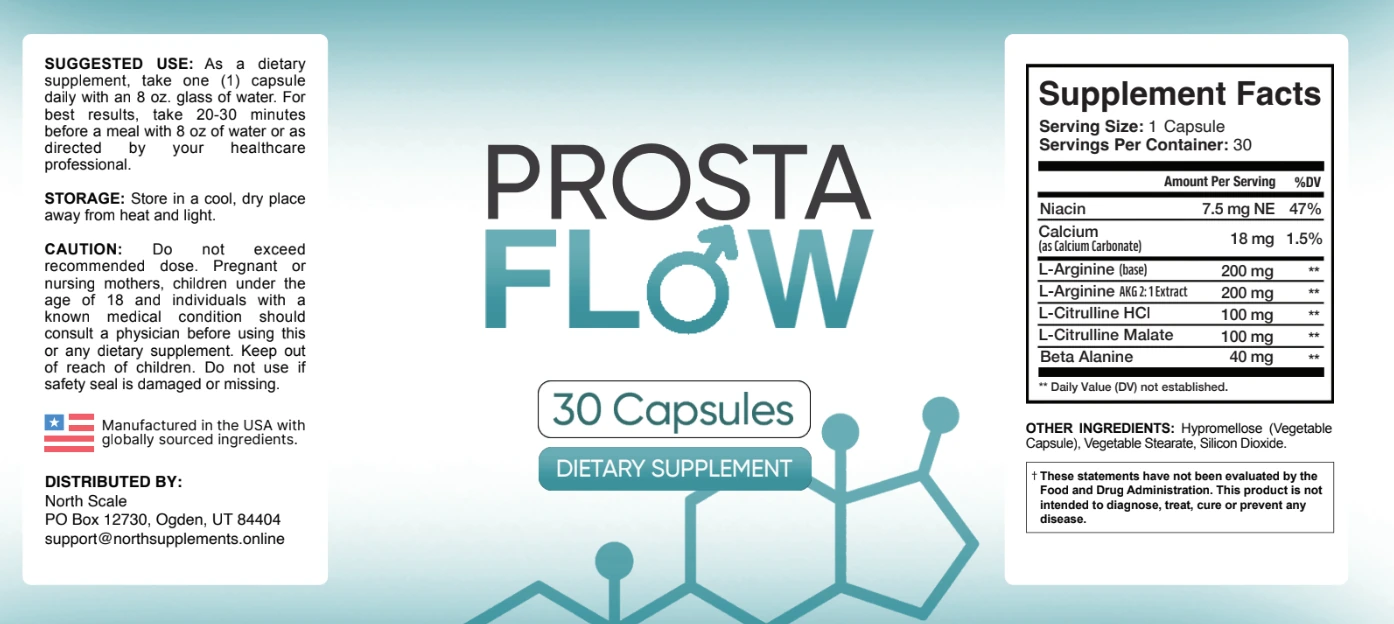
- Six of the seven rows on this particular panel can be resolved. One cannot.
Why a weight is not always an amount
Start with the problem this skill solves. Two packs sit on a shelf, both printing 200 mg of an ingredient, both priced the same. One delivers 200 mg of the substance and the other delivers 90. Nothing on the front tells you which is which and both labels are entirely honest.
The difference lives in a few words printed beside the ingredient name: a salt, an extract ratio, a standardisation percentage. Those words are the part of a panel most readers skip and they are the part that decides what the milligrams buy.
None of this is a trick. It is the convention every supplement panel is written under, and the makers who volunteer the extra number are doing a reader a favour that regulation does not oblige them to do.
Salts, and the passenger in every one
Amino acids and minerals are usually sold bound to something, because the bare molecule is often unstable, hygroscopic or unpleasant to handle. The thing it is bound to has weight, and the printed figure is normally the weight of the pair.
The passenger can be light or heavy. A hydrochloride adds a proton and a chloride ion, which is a small proportion of the total. Malic acid is a much larger molecule, and a malate salt can be anywhere from half to two thirds the substance you came for depending on the proportion used.
Minerals work slightly differently and more helpfully. A calcium row printed as 18 mg with calcium carbonate in brackets is stating the elemental calcium, which is the figure that matters, so the bracket is describing the source rather than adding weight to be subtracted.
| What the label says | What the weight includes | Can you resolve it? |
|---|---|---|
| L-Arginine | The amino acid alone. A free base carries no counter-ion. | Yes. The printed weight is the substance. |
| L-Arginine AKG 2:1 Extract | Arginine plus alpha-ketoglutarate, two parts to one. | Yes, because the ratio is printed. Two parts in three of the weight are the amino acid. |
| L-Citrulline HCl | Citrulline plus a hydrochloride counter-ion, which is light. | Approximately. The loss is modest rather than negligible. |
| L-Citrulline Malate | Citrulline plus malic acid, in an unstated proportion. | No. A 1:1 salt and a 2:1 salt carry very different amounts for the same weight. |
| Calcium (as Calcium Carbonate) | The elemental calcium figure, already resolved by the label. | Yes. No further sum is needed. |
| Beta Alanine | The amino acid alone. | Yes. |
Six rows from one panel. Four resolve completely, one resolves approximately and one does not resolve at all, which is the ordinary distribution on a well-filled label.
A 2:1 ratio, worked through
Here is the sum, done slowly, on a real row.
The panel prints L-Arginine AKG 2:1 Extract at 200 mg. The 2:1 means two parts arginine to one part alpha-ketoglutarate by weight. Three parts in total, so each part is about 67 mg, and two of them are the amino acid. That is roughly 133 mg of arginine inside 200 mg of extract.
Add the free base row, which is 200 mg of arginine with nothing attached, and the capsule carries about 333 mg of arginine in total rather than the 400 mg that the two rows appear to promise. Sixteen per cent of the visible weight is the passenger.
That calculation took twenty seconds and it changes the number you would carry to a comparison. It is only possible because the label printed the ratio.
What the same sum looks like at 1:1
If the ratio had been 1:1, the 200 mg would carry 100 mg of arginine, and the capsule's total would be 300 rather than 333. Same printed weight, same ingredient name, a different amount in the capsule. This is the entire reason the small number matters.
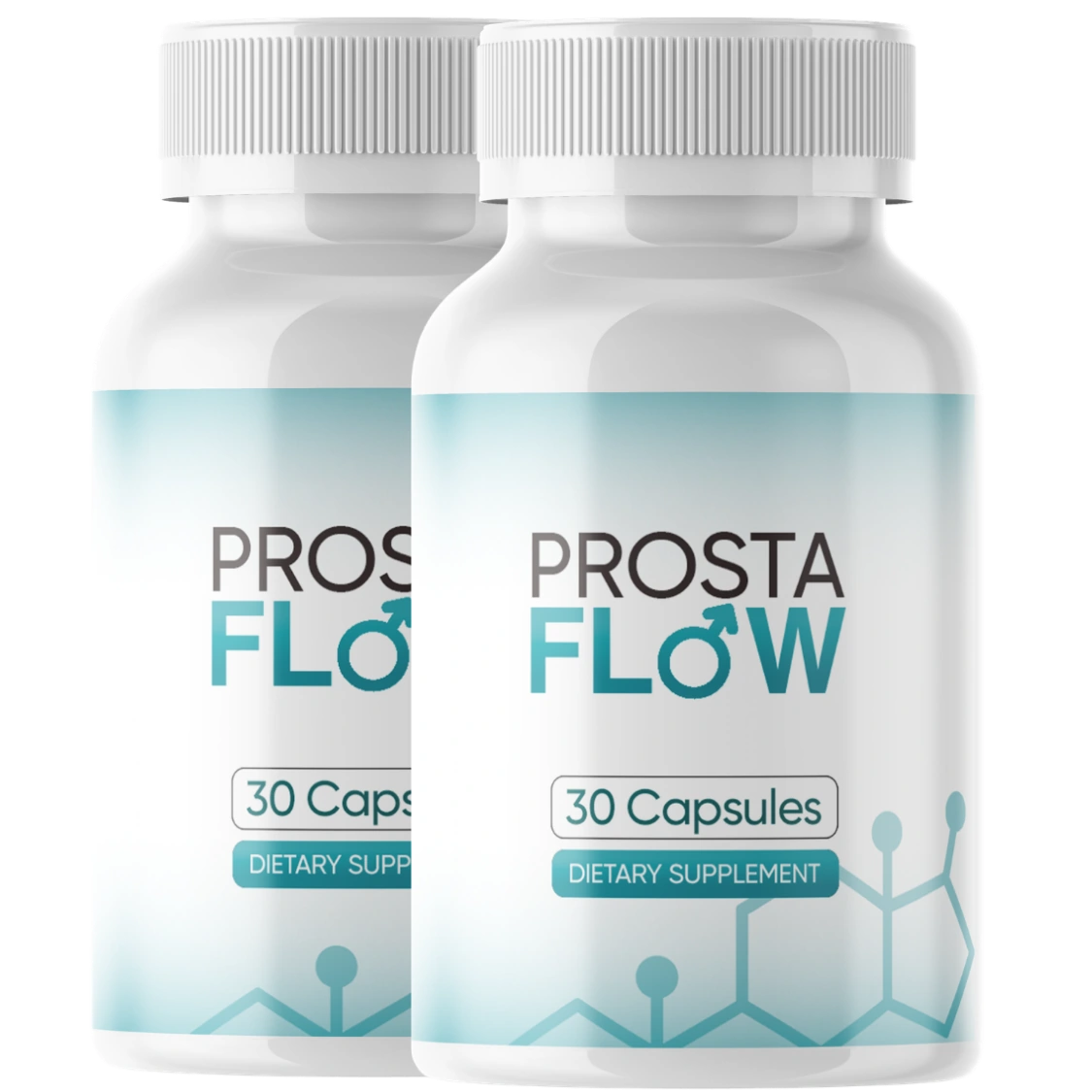
See a printed ratio on a real ProstaFlow panel
Seven rows, six of them resolvable with a calculator, one capsule a day, and 60 days from despatch in which to decide.
Two bottles $158 · six bottles $294 · 60-day money-back guarantee
Order ProstaFlow On The Official WebsiteOne capsule a day · 30 per bottle · lot PRO-26/PR-1730
The row with no ratio at all
The same panel then prints L-Citrulline Malate at 100 mg and gives no ratio, which makes that row unresolvable from the packaging.
Citrulline malate is sold as 1:1 and as 2:1, and the two carry substantially different amounts of citrulline for the same weight. The literature reflects that: the meta-analysis of eight studies pooled single doses of six to eight grams taken before lifting, and a 2025 head-to-head compared plain citrulline against citrulline malate directly, which is a comparison nobody would bother to run if the malate were incidental.
The honest way to read a row like that is to treat the 100 mg as the weight of the salt and to leave the amino acid content unstated rather than guessing at it. Guessing generously is how a panel gets credited with something it never claimed.
Six of its seven rows resolve. A panel that volunteers one ratio and omits another is not being evasive; it is being inconsistent, and the inconsistency is visible precisely because the first ratio is there.
Percentages on a botanical
The same logic runs through botanical extracts, where it is expressed as a percentage rather than a ratio, and where the consequences are larger.
A row reading Lycopene 5% at 10 mg means ten milligrams of a preparation that is five per cent lycopene, which is half a milligram of the carotenoid. A reader taking the 10 mg at face value is out by a factor of twenty. The same convention applies to a pygeum bark standardised to 3 per cent phytosterols, or a curcumin standardised to 95 per cent curcuminoids.
A botanical row carrying a weight, a plant part and no percentage at all is the least informative kind of entry on any panel. It is not against the rules and it leaves the extract strength entirely to the maker.
Daily Value percentages and their basis
The last of the four numbers behaves differently again, and it is the only one that can be checked against a published figure.
| Row | Printed | Reference intake | The sum | Verdict |
|---|---|---|---|---|
| Niacin | 7.5 mg NE, 47% | 16 mg NE a day for adult men, per the Institute of Medicine chapter | 7.5 divided by 16 is 0.469 | Correct rounding. |
| Calcium | 18 mg, 1.5% | 1,000 mg for men 51 to 70 and 1,200 above, per the reference tables | 18 divided by 1,200 is 0.015 | Correct on the 1,200 mg basis. |
Checking a label's own arithmetic takes two minutes and tells you something about how carefully the rest of it was prepared. This one passes.
Both percentages on this panel are right for the reference figure they are calculated against, and neither has been rounded upward to flatter the row. The calcium line is worth a note: 1.5 per cent is correct on a 1,200 mg basis, while against the 1,000 mg recommended for men aged 51 to 70 it would read 1.8. That is a rounding basis rather than an error, and either way the row is under two per cent of a day's requirement.
Rows carrying no percentage at all are not hiding anything either. No Daily Value has ever been set for arginine, citrulline or beta alanine, because there is no established daily requirement for them. The ISSN position stand on beta-alanine gives a working range for a performance effect, which is a different kind of figure from a requirement and is never printed on a panel.
Reading a panel accurately makes somebody a better shopper and no more than that. Whether a supplement belongs in a particular case is decided by a history and an examination, and this page is neither.
Five ratio questions for any panel
Take these to the next label you pick up. They work on any category, not just this one.
- Is this a free base, a salt, or an extract? The words in brackets answer it, and the answer decides whether a sum is needed at all.
- If it is a salt or an extract, is the ratio printed? With one, do the sum. Without one, treat the weight as the weight of the salt and leave the rest unstated.
- If it is a botanical, is there a standardisation percentage? Five per cent of 10 mg is half a milligram, and the difference between those two figures is where most botanical marketing lives.
- Does the Daily Value arithmetic check out? Two minutes with a search engine and a calculator tells you something about how carefully the rest of the label was prepared.
- Once resolved, how does the amount compare with the dose its research used? This is the question all the others were clearing the way for.
Run those five and a panel stops being a wall of numbers. It becomes a short list of resolved amounts you can set against a short list of published ones, which is the only comparison that decides anything.
The panel page applies all five to this particular bottle, and the ingredients page prints the resolved amounts as a table.
References
- Varvik FT, Bjornsen T, Gonzalez AM. Acute Effect of Citrulline Malate on Repetition Performance During Strength Training: A Systematic Review and Meta-Analysis. Int J Sport Nutr Exerc Metab. 2021;31(4):350-358. PMID 34010809. https://pubmed.ncbi.nlm.nih.gov/34010809/
- Martin-Olmedo JJ, Miras-Moreno S, Cuadra-Montes K, et al. Malate or Not? Acute Effects of L-Citrulline Versus Citrulline Malate on Neuromuscular Performance in Young, Trained Adults: A Randomized, Double-Blind Study. Int J Sport Nutr Exerc Metab. 2025;35(2):89-98. PMID 39662304. https://pubmed.ncbi.nlm.nih.gov/39662304/
- Institute of Medicine (US) Standing Committee on the Scientific Evaluation of Dietary Reference Intakes. Niacin. In: Dietary Reference Intakes for Thiamin, Riboflavin, Niacin, Vitamin B6, Folate, Vitamin B12, Pantothenic Acid, Biotin, and Choline. Washington (DC): National Academies Press; 1998. NCBI Bookshelf NBK114304. https://www.ncbi.nlm.nih.gov/books/NBK114304/
- Institute of Medicine (US) Committee to Review Dietary Reference Intakes for Vitamin D and Calcium; Ross AC, Taylor CL, Yaktine AL, Del Valle HB, editors. Summary Tables. In: Dietary Reference Intakes for Calcium and Vitamin D. Washington (DC): National Academies Press; 2011. NCBI Bookshelf NBK56068. https://www.ncbi.nlm.nih.gov/books/NBK56068/
- Trexler ET, Smith-Ryan AE, Stout JR, et al. International society of sports nutrition position stand: Beta-Alanine. J Int Soc Sports Nutr. 2015;12:30. PMID 26175657. https://pubmed.ncbi.nlm.nih.gov/26175657/