ProstaFlow Official Website › Blog › Does ProstaFlow Contain Pycnogenol
Does ProstaFlow Contain Pycnogenol? The Study Behind the Question
Search for ProstaFlow and Pycnogenol and you will find one small study. People quote it as if it were about this capsule. It was not. Here is what the study did, and why the difference matters.
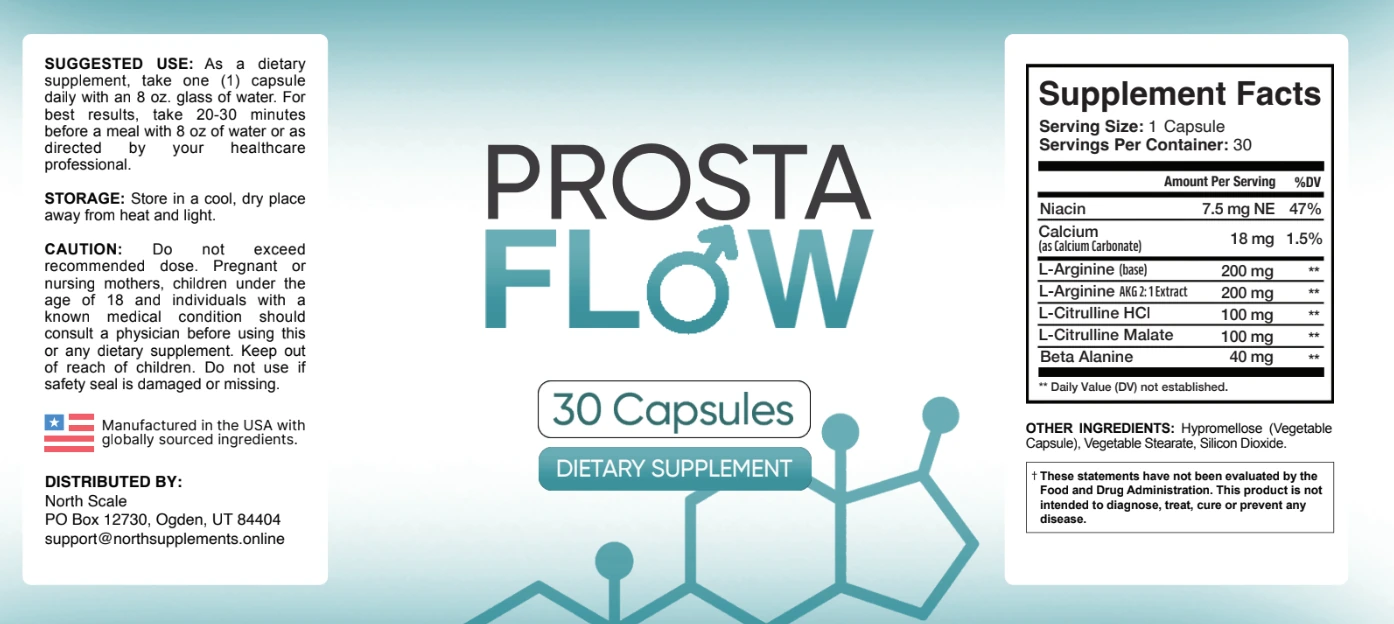
No. ProstaFlow contains no Pycnogenol and no pine bark extract. A 2017 open-label Japanese study gave 20 men 460 mg a day of L-arginine bundled with 40 mg of Pycnogenol for 16 weeks. The pine bark was the nitric oxide donor in that product, so the result does not transfer to ProstaFlow.
- The panel has seven rows and none is Pycnogenol or pine bark extract.
- The 2017 Japanese study was open-label, ran 16 weeks and had no placebo group.
- Its active product bundled 460 mg a day of L-arginine with 40 mg of Pycnogenol.
- The 2003 trial, the Japanese follow-up and the 2023 meta-analysis all test the pairing, not arginine alone.
- ProstaFlow holds about 333 mg of arginine per capsule and no pine bark.
- No study of ProstaFlow itself is named in the sources behind this website.
Why does Pycnogenol come up when people search for ProstaFlow?
ProstaFlow is built around arginine. So buyers go looking for studies of arginine and the prostate. They find very few. One small study turns up again and again, and its product carried Pycnogenol, a brand name for a pine bark extract.
That is how the two names end up in the same search. Someone reads that study, sees arginine, and assumes the result belongs to every arginine capsule. It does not. The study tested a particular bundle. This page looks at the bundle and then at the ProstaFlow label, side by side.
What did the 2017 Japanese study actually do?
The record is a short paper, and the facts that matter fit in one table.
| Feature | What the study did |
|---|---|
| Design | Open-label. Everyone knew what they were taking. |
| Size | 40 men, split across two arms |
| Active arm | 20 men took 460 mg a day of L-arginine bundled with 40 mg of Pycnogenol |
| Length | 16 weeks, which is 112 days |
| What was measured | A standard prostate symptom questionnaire and its quality-of-life question |
| Placebo group | None |
| Reported result | Symptom scores improved in both arms |
Read the last two rows together. There was no placebo group, and both arms got better. In an open study, people who start something often improve for reasons unrelated to the product. Symptoms drift from week to week on their own. People also pay more attention once they are being measured.
So the paper is information, not proof. It shows that the numbers on a questionnaire moved. It cannot show that the arginine or the pine bark caused the move. What the second arm took is not described in the sources used for this website, so this page does not guess.
Why does the pine bark matter so much?
In that product, the pine bark extract was the nitric oxide donor. That is the point the site makes, and it is the heart of the matter. The study was not asking, “Does arginine help?” It was asking, “Does this arginine and Pycnogenol pairing help?”
The same is true of the other encouraging work the site names. The first pycnogenol-and-arginine trial, a Japanese follow-up, and a 2023 meta-analysis of L-arginine with Pycnogenol all test the pairing. None of them tests arginine alone. So every positive arginine result in this area comes with pine bark beside it.
That is a useful rule when you read a prostate label. Do not ask only, “Does it contain arginine?” Ask, “Does it contain the other half of the pair that was tested?”
How does that product compare with one ProstaFlow capsule?
Here are the two side by side, using only facts the source material prints.
| Item | Product in the Japanese study | One ProstaFlow capsule |
|---|---|---|
| Arginine | 460 mg a day, bundled | About 333 mg, from two rows |
| Pycnogenol | 40 mg a day | None |
| Pine bark extract of any kind | Yes, as the nitric oxide donor | None |
| Other actives | Not described in these sources | Citrulline salts 200 mg, beta alanine 40 mg, niacin 7.5 mg NE, calcium 18 mg |
| Course length | 16 weeks | No course length printed on the bottle |
| Placebo comparison | None | No study of this capsule is named |
The arginine in ProstaFlow is lower than the study’s 460 mg, and the key partner ingredient is missing altogether. ProstaFlow also carries rows the study did not mention. That makes it a different formula, not a copy.
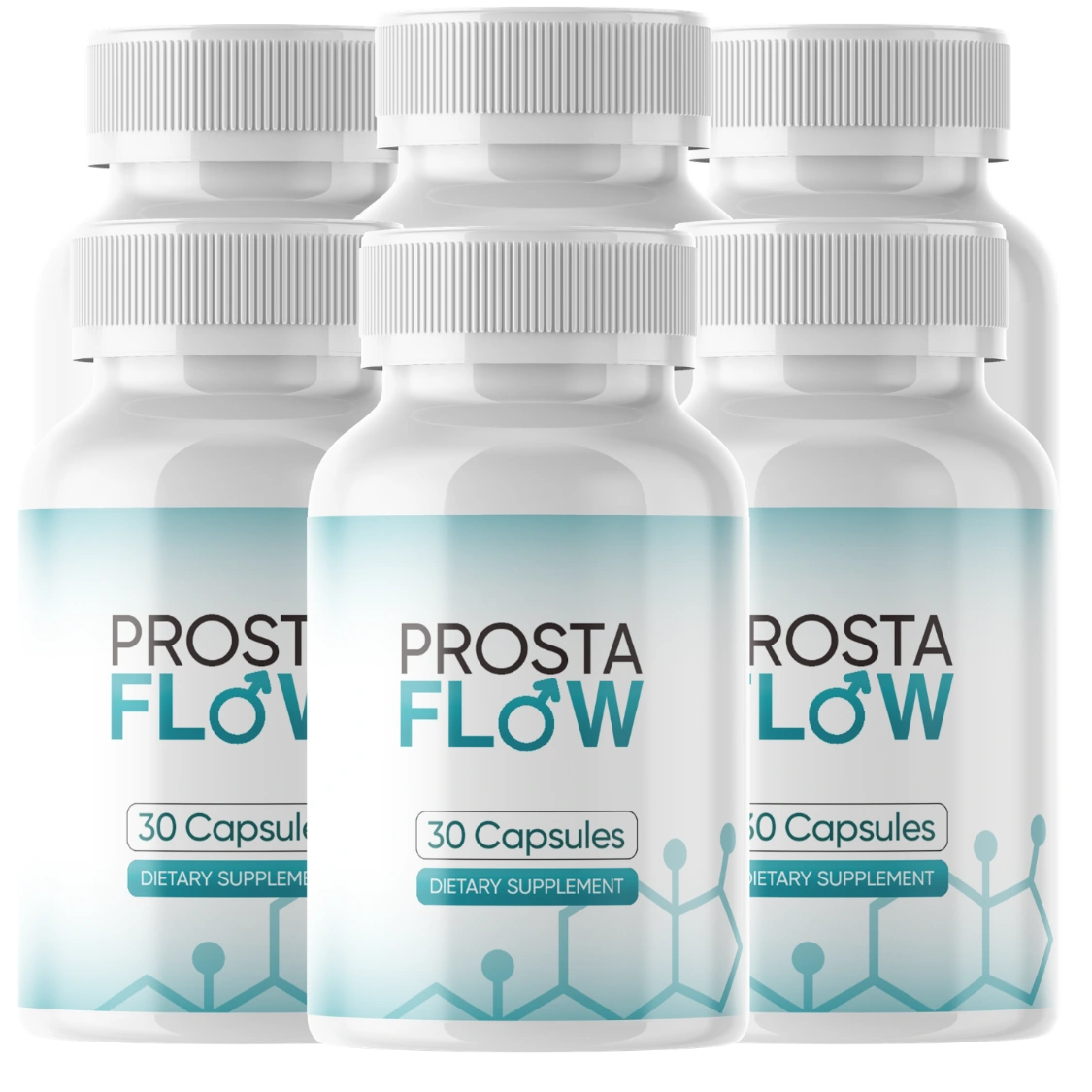
See the label before you decide
The order page lists the three packs and the refund terms, and the panel on the bottle is the same seven rows you read here.
See today’s price and guaranteePrices were read on 19 September 2026. The checkout shows the price that applies. Prostaflowdaily earns from orders placed through the checkout this website hands off to.
Why can’t the result carry over to ProstaFlow?
There are four plain reasons.
- Different formula. The one ingredient credited as the donor is not in the capsule.
- Different amounts. The arginine figure is not the same, and the other rows have no counterpart in the paper.
- No control group. Without a placebo arm, the paper cannot separate the product from time, habit and attention.
- Small numbers. Forty men in total is a pilot, not a verdict.
None of this proves that ProstaFlow fails. It means the question is open. The honest position is that no urinary-symptom trial of ProstaFlow itself is named in the sources, and the nearest trial used a different product.
What does the seller claim, and does anyone claim Pycnogenol?
The seller’s page makes two support lines. It says the product supports prostate comfort and supports prostate-related wellness. Those are the ceiling. The bottle itself prints no benefit claim, and the word prostate appears on it only inside the brand name.
Pycnogenol is not on the seven-row panel. It is not on the other-ingredients line either, which names hypromellose, vegetable stearate and silicon dioxide. So if you see a page that links ProstaFlow with Pycnogenol, check the panel on your own bottle. The panel is the document that counts.
ProstaFlow is not a drug. It is not FDA approved, and no supplement is. It does not shrink a prostate, and it is not meant to diagnose, treat, cure or prevent any disease.
What five questions should you ask before leaning on any study?
This habit will serve you well with any supplement. Take the study, and ask:
- Was the product in the study the same product I am looking at?
- Were the amounts the same, or close?
- Was there a placebo group, or did everyone know what they took?
- How long did it run, and how long will I run it?
- What did it measure: a symptom score, or a blood marker?
Now run the Japanese paper through the list. Same product? No. Same amounts? No. Placebo group? No. Length? 16 weeks, which is longer than the 60-day refund window. Measure? A symptom questionnaire. Four of the five answers point away from ProstaFlow, and that is the quiet reason the paper cannot be used to sell it.
If you are curious about Pycnogenol itself, that is a question for your own doctor or pharmacist. Nothing in the sources behind this website covers its safety or its interactions. New urinary symptoms, or symptoms with blood, pain or fever, need an assessment before any supplement.
Where do these facts come from?
Label, price and policy facts come from the printed ProstaFlow label and the seller’s own pages on this website. Research facts come from the public records below.
- The one trial of L-arginine for urinary symptoms. https://pubmed.ncbi.nlm.nih.gov/28053897/
- The first pycnogenol-and-arginine trial. https://pubmed.ncbi.nlm.nih.gov/12851125/
- A Japanese trial of pycnogenol with L-arginine. https://pubmed.ncbi.nlm.nih.gov/21618639/
- The 2023 meta-analysis of L-arginine with Pycnogenol. https://pubmed.ncbi.nlm.nih.gov/37908749/
- A review of the L-arginine / nitric oxide pathway in the lower urinary tract. https://pubmed.ncbi.nlm.nih.gov/14633324/
- The AUA guideline on lower urinary tract symptoms. https://pubmed.ncbi.nlm.nih.gov/34384237/
- NCCIH's guidance on using supplements wisely. https://www.nccih.nih.gov/health/using-dietary-supplements-wisely
Frequently asked questions
Does ProstaFlow contain Pycnogenol?
No. The panel has seven rows: niacin, calcium, two arginine rows, two citrulline rows and beta alanine. Pycnogenol and pine bark extract are not among them, and the other-ingredients line names only hypromellose, vegetable stearate and silicon dioxide.
Is there any pine bark extract in ProstaFlow?
No. The printed label lists no pine bark extract of any kind. If a page says otherwise, count the rows on the bottle you hold and trust the panel over the page.
What did the 2017 Japanese study find?
Symptom scores improved in both arms of a 16-week open-label study of 40 men. There was no placebo group, so the paper cannot show that the product caused the change.
Does that study prove arginine helps urinary symptoms?
No. The active product bundled 460 mg a day of L-arginine with 40 mg of Pycnogenol, and the pine bark was the nitric oxide donor. The paper tested the pair, not arginine alone.
Why is that study quoted for ProstaFlow?
It is the one trial of L-arginine for urinary symptoms named in the sources, so it gets attached to any arginine product. That link is a shortcut, not a finding about this capsule.
What does ProstaFlow contain instead?
About 333 mg of arginine from two rows, 200 mg of citrulline salts, 40 mg of beta alanine, 7.5 mg NE of niacin and 18 mg of calcium. The total is 665.5 mg per capsule, with every row printed.
Our view
We would not use the Pycnogenol paper as evidence for ProstaFlow, and we are glad this website says so. It is an honest, small, open study of a different product.
What ProstaFlow offers is a complete label, a once-a-day routine and a refund window. What it does not offer is a trial of its own. If you try it, treat it as an experiment with a deadline. Write down a baseline, repeat it at weeks four and eight, and decide before day 46.
Last updated . Medically reviewed by Dr. Al Borhan, MD, Physician, on October 16, 2026.
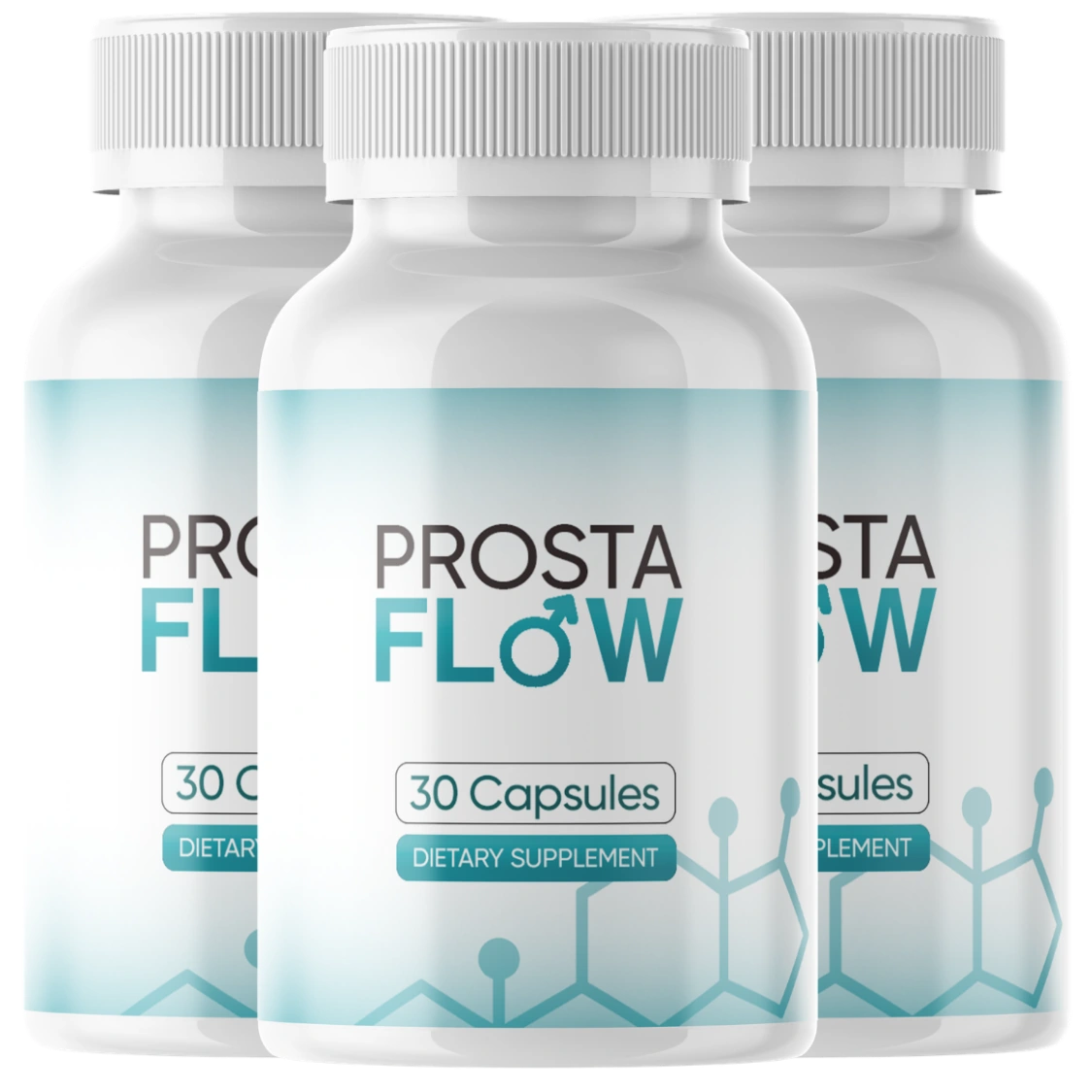
A fair test beats a borrowed study
Three bottles give 90 capsules. The 60-day refund window runs from the shipping date and covers opened bottles.
See today’s price and guaranteeOne-time payment, no subscription, 60-day money-back guarantee from the shipping date. Prostaflowdaily earns from orders placed through the checkout this website hands off to.
Keep reading